
It Takes Two
Book recommendations about money and payments

As the Northern Hemisphere’s summer holiday season approaches, this year I am recommending two books for the beach:
1. Money: The Inside Story by Rupal Patel and Jack Leslie, two economists from the Bank of England (274 pages)
2. The Almighty Dollar by Brendan Greeley, a journalist and PhD researcher (350 pages)
One of the three core functions of money is a means of exchange i.e. payments. Understanding money is therefore essential to understanding payments and both these books help with exactly that.
Money: The Inside Story
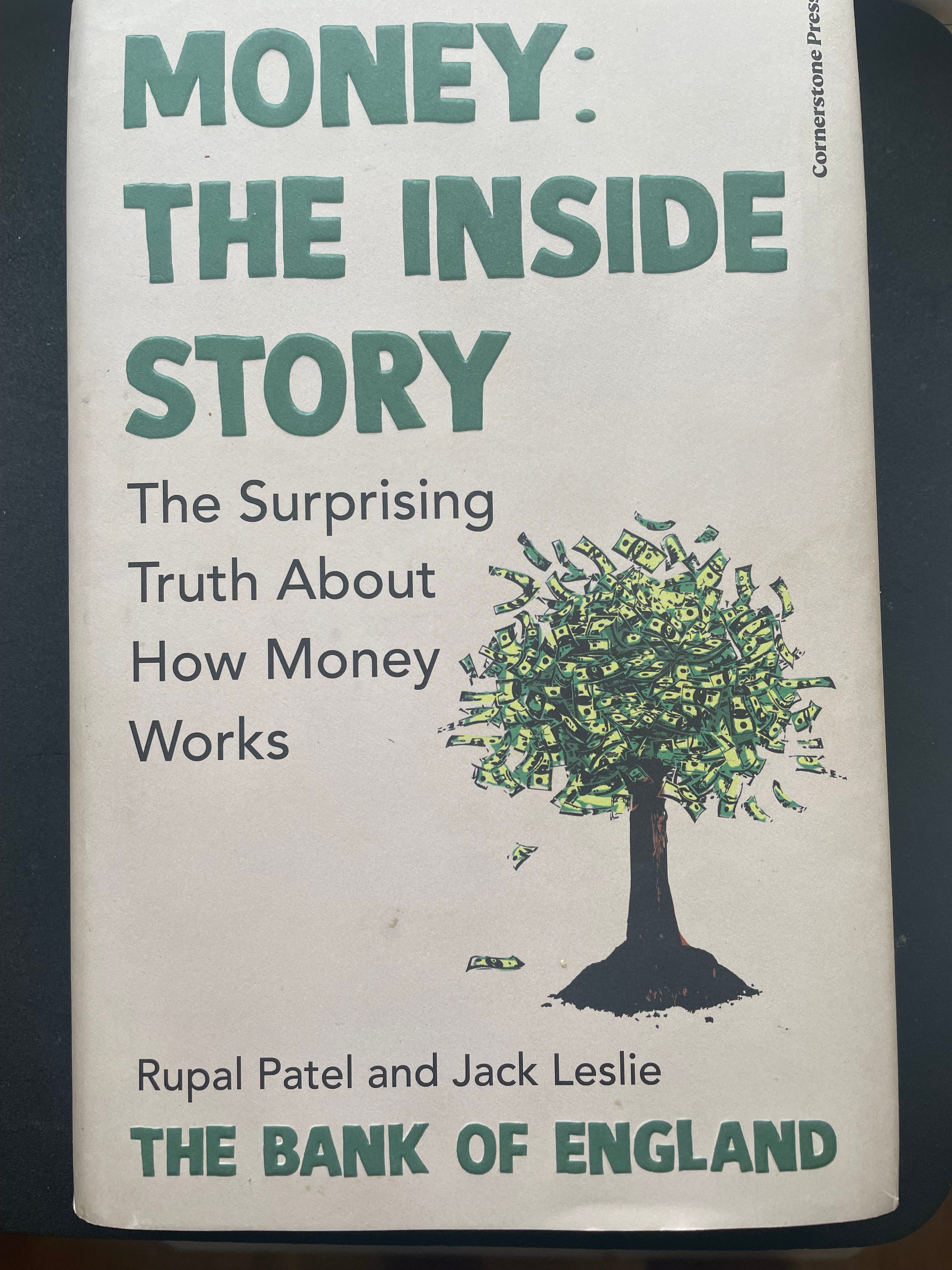
This book is about how money works and how the Bank of England works – and it is about how money is changing.
Its scope is wide-ranging, covering commodity money, the Bank’s RTGS (“The Big Black Box Money Machine”), inflation, taxes, economic crises, bank failures, reserves, repos, the first ecommerce payments, crypto currencies, CBDCs and more.
It contains interesting anecdotes such as the 700 banks in the UK in the early 1800s, barely number 100 today; a typical £20 note is passed around 2,328 times and the largest bank note in history was for 100 quintillion (10^20) pengos in Hungary in 1946. It also highlights the Bank of England’s origin, formed in 1694, rather dubiously to finance war.
The book contains a surprising number of inaccuracies. For example, the authors claim all payments in the UK go through the RTGS (p70 – for a start, on-us payments between accounts at the same bank – typically 20% - 30% of a bank’s volume, never touch the central bank). There are also omissions that would have helped with the narrative flow, such as where interest comes from and why markets would be unstable without a central bank; and there are contradictions. For example, the authors state the Bank of England’s job is to protect the value of money (p.10) then cheerily go on to say prices in the UK have risen tenfold over the past 50 years (p247)!
Overall though, it is a good read and informative.
The Almighty Dollar
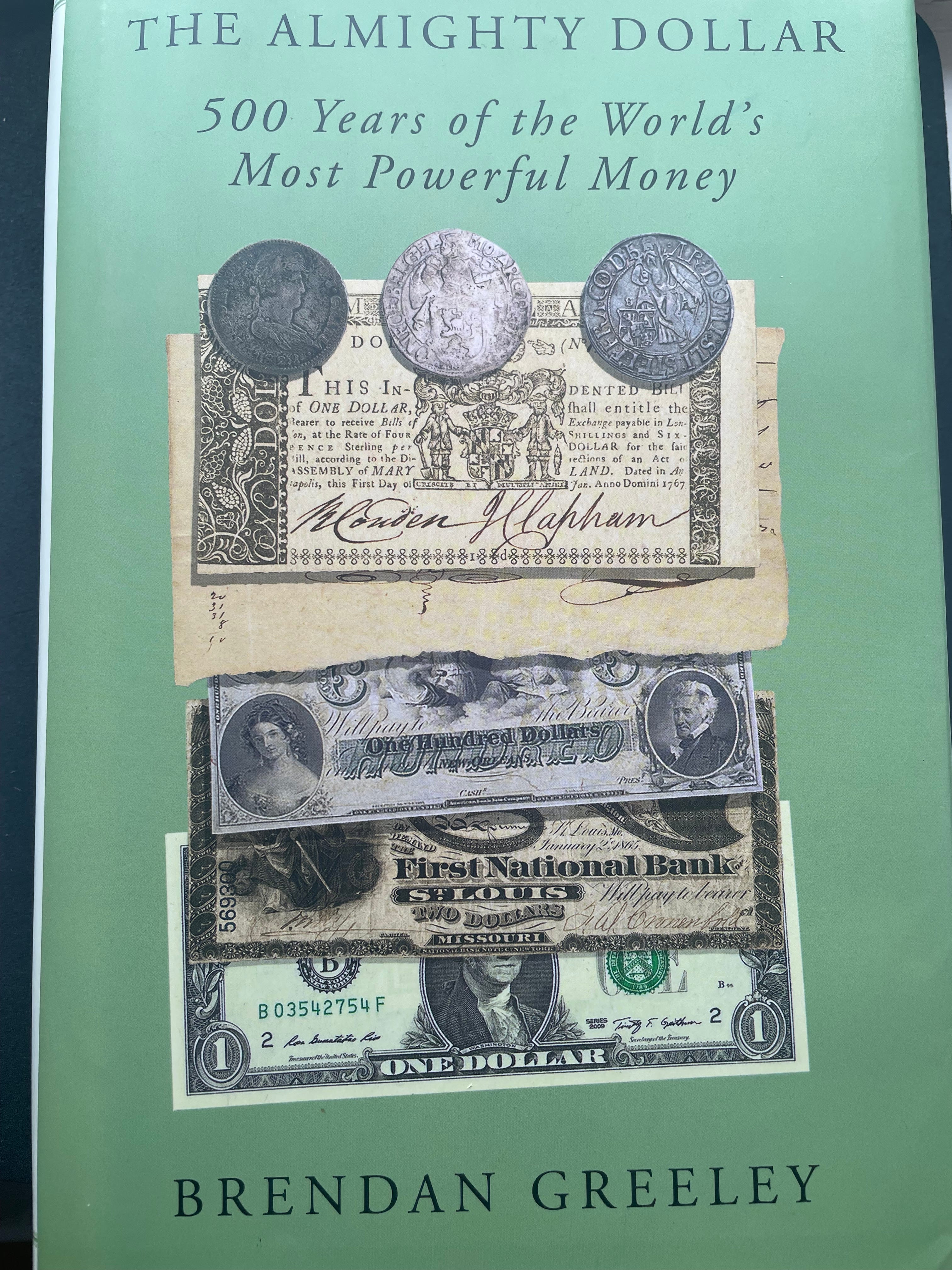
This is a more scholarly (and longer) book than Money: The Inside Story but an equally good read. It is the product of almost a decade of research by the author, including field trips to a silver mine in Bohemia, an archive in Toledo, a university in Prague, a museum in Madrid, a numismatist in Baton Rouge, a century-old family business in Sioux County with bookkeeping records going back to the Depression and a library at Harvard Business School, plus many other locations.
The author follows the origins of the dollar from its inception as a silver coin, the joachimsthaler in 1518, mined and minted in St.Joachimstal (in today’s Czechia), to its spread across Europe and into China, widely copied for international trade particularly as Spanish pieces of eight minted from silver mined in Latin America, then to paper forms such as bills of exchange and bills of credit, before ending up as bank deposits today.
The author’s key point is America “succumbed” to the dollar, which existed long before the USA, rather than invented it.
The book contains a mass of insights, including:
1. There has always been “big” money for wholesale trade which is very different to “little” money for day-to-day payments and retail
2. Dollars are different, depending on how and where they are used. For example, a new reserve dollar at a bank in New York is different to a new deposit dollar for a farmer in Iowa
3. Silver and credit worked as part of the same system for centuries before banks took over, including central banks
4. There is no such thing as monetary sovereignty – no country, including the USA today has ever held complete sovereignty over the dollar since its origins in the 16th century in Bohemia (Czechia)
5. Money needs a destination, a sink – China was a major sink for the joachimsthaler where it was more valuable than in Europe; and China in the 17th ,18th and 19th centuries was a major factor in spreading usage and copies of silver dollars throughout the world
6. In England’s colonies, there were never enough silver dollars and always insufficient small change, which led to the emergence and parallel use of paper money
7. The dollar works as a single currency that serves a lot of different people inside and outside the USA
8. Money is always political, despite the best efforts of central banks to appear independent
9. Central banks are an imperfect way to control bank money
10. … and many more.
Why The Recommendations?
Both books show that money has been in a state of flux and evolution for centuries. Today’s fiat money is relatively new, going back to 1971 when the USA suspended the gold exchange standard agreed at Bretton Woods. Digital technology and new forms of digital money mean it is inevitable that money will continue to change and with it the current monetary system.
From a payments perspective, neither book really explains how central bank reserves facilitate interbank payments and how they risk systemic instability (should a bank have fewer reserves than payment obligations to settle). The reality is central banking creates the stability risks which need a central bank to manage – this I believe is unsustainable, especially in an age of digital money where I have explained before1 that shared ledgers can make reserves unnecessary.
This is possibly one reason why so many central banks are planning CBDCs, they realise they need to act to remain relevant in payments. However, as Greeley’s book shows so clearly, money has always been driven by the needs of merchants and individuals. Bureaucrats have to respond to those needs, for example as they did so rapidly in New Orleans in the silver dollar riots of May 1842 (p171).
You may have a different view but both these books will make you think about where money and payments go next.
Enjoy reading them – and enjoy the summer.
Clearing and Settlement: https://jeremylight.substack.com/p/you-oughta-know
Tokenising Credit: https://jeremylight.substack.com/p/payments-for-a-future-generation