
Asia Calling
Real-time payments in Asia Pacific

This week is Asia Pacific’s turn for an update on the progress on real-time payments adoption in the region (you can read about the payments landscape in Asia in earlier articles1).
As a reminder, I define real-time payments based on the instant availability of funds to the receiver, immediately on initiation by the payer (i.e. instant clearing). These are account-to-account (A2A) payments, independent of the type of account and independent of how banks and account providers settle with each other. Broadly they encompass bank-to-bank, bank-to-wallet, wallet-to-wallet and wallet-to-bank payments, where a wallet has a stored value account (or is linked to one) from usually a non-bank. They also include on-us payments between accounts within the same bank or provider2.
Figure 1 shows the real-time payments per capita for countries in Asia Pacific for 2024 and 2025, where data is available.
China leads at 1,154 real-time payments per capita – equivalent to three payments per day for every person in the country, followed by Thailand at 547 and Singapore at 481.
The average across all the countries shown is 519 real-time payments per capita in 2025, up from 499 in 2024. Excluding China, the figures are 144 and 113 respectively.
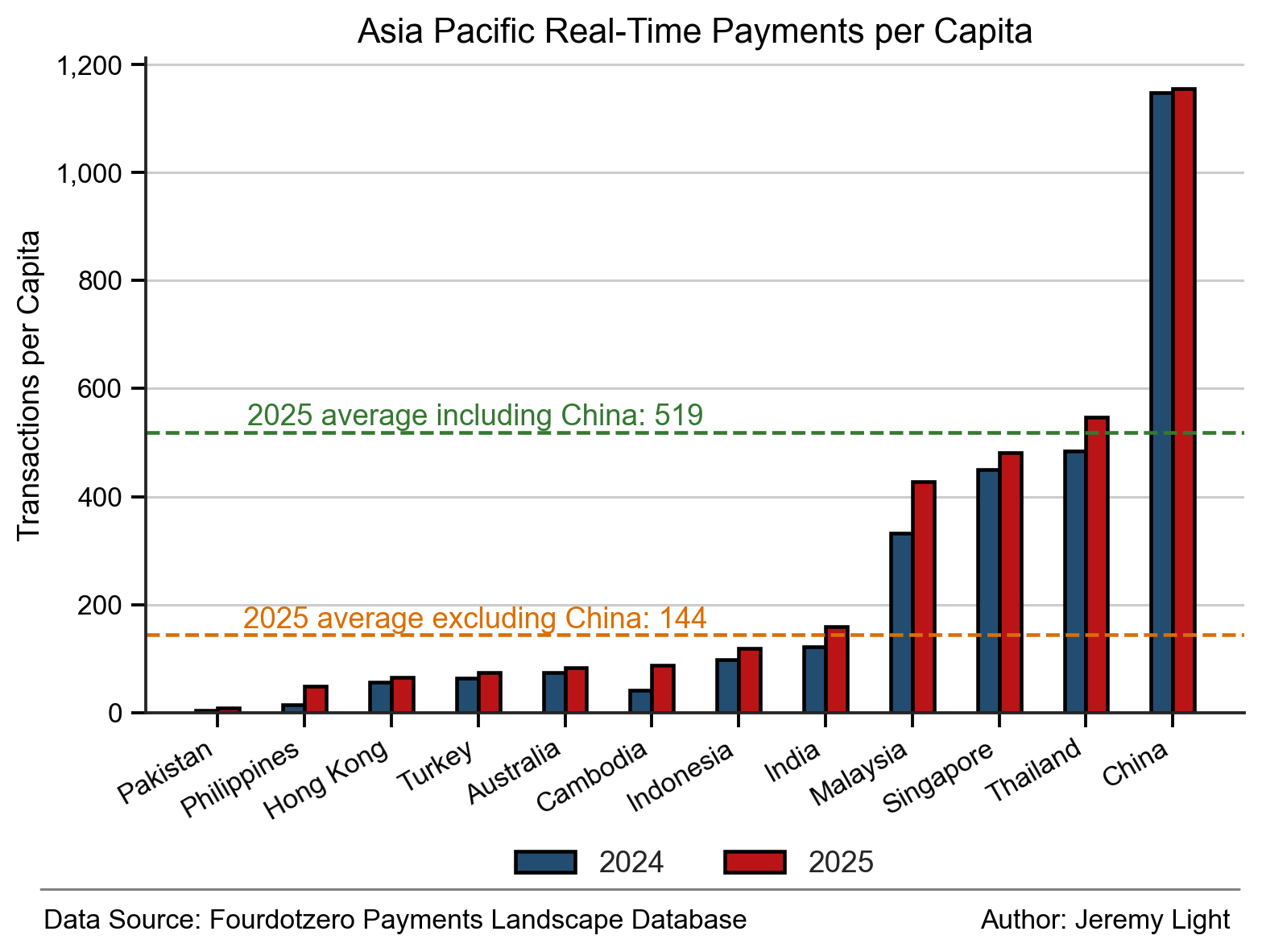
Figure 1 – real-time payments per capita in selected countries in Asia Pacific
Pakistan at nine real-time payments per capita and the Philippines at 48 look minnows in Figure 1 compared to the leaders but they are growing strongly. Pakistan’s (population 259m) real-time Raast system processed 2bn payments in 2025, up from 800m in 20243. The Philippines (population 118m) real-time Instapay system processed 4.7bn payments in 2025, up from 1.4bn in 20244.
Figure 2 shows the annual growth rate in real-time payments per capita in 2025 for the countries in Figure 2.
Notably, China’s payment per capita figure was almost flat, increasing from 1,147 in 2024 to just 1,154 in 20255. The non-bank payments – mainly Alipay and WeChat Pay actually decreased by 12bn payments from 1.338 trn payments to 1.325 trn. It was only a 19bn increase in bank payments that caused the small overall increase.
Perhaps real-time payment volumes in China have plateaued, at least for now?
Also of note is India. Despite the 228bn UPI payments processed in 2025, on a per capita basis it lags behind Malaysia, Singapore, Thailand and China, indicating there is considerable room for UPI (and the IMPS interbank system) to grow further - which is happening. India’s volumes grew 30% in 2025 and in Q1 this year they were 26% higher than in Q1 2025.
Excluding China, the Asia Pacific countries in Figure 2 grew at a healthy 28% on average in 2025.
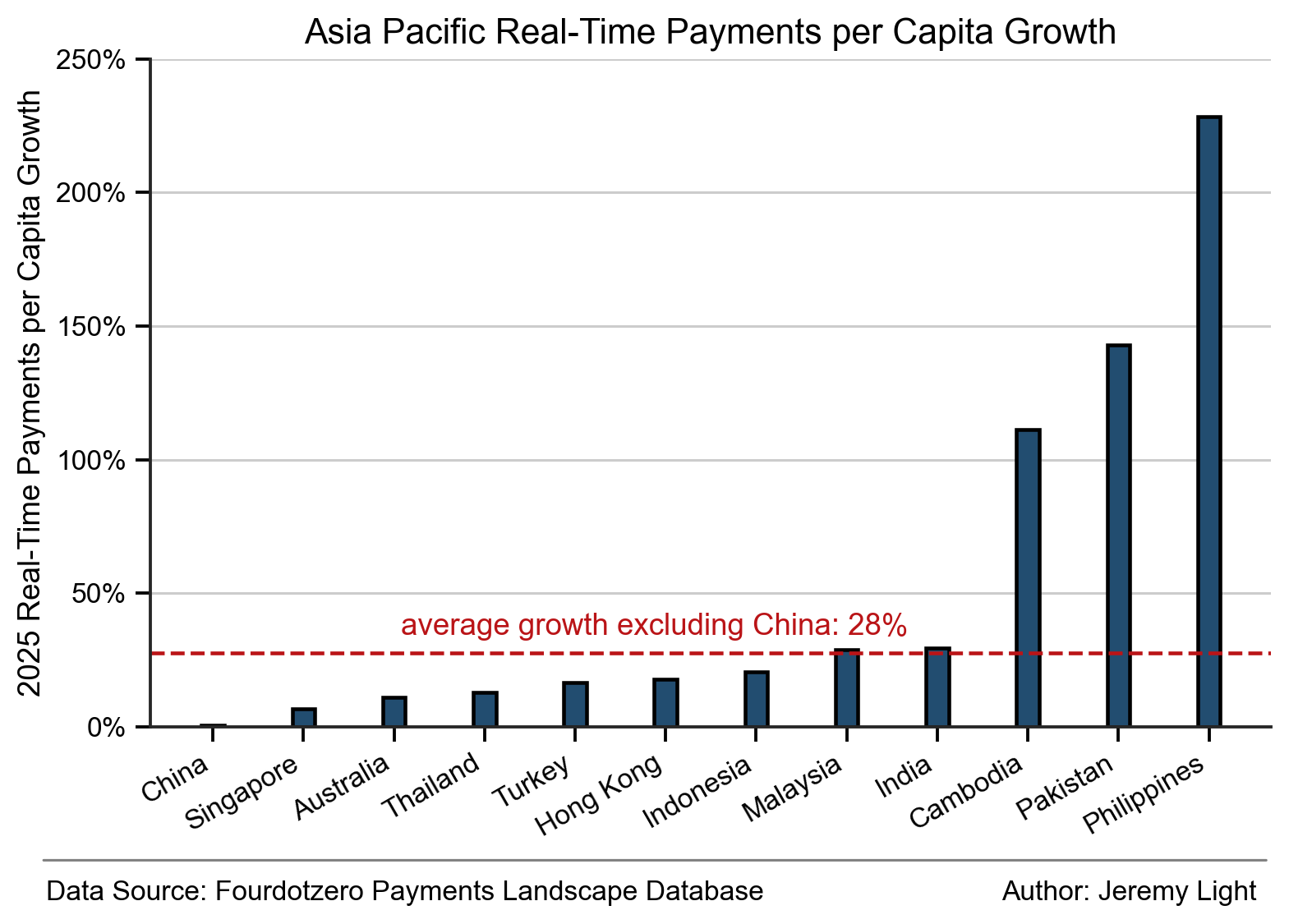
Figure 2 – real-time payments per capita growth (2025) in selected countries in Asia Pacific
Three countries more than doubled their payments volumes - the Philippines (Instapay) 228%, Pakistan (Raast) 143% and Cambodia (Bakong)6 111%.
Notable for their absence in Figures 1 and 2 are Japan, New Zealand, South Korea and Vietnam. New Zealand has no real-time payments system while volume figures for the others are unavailable or difficult to analyse.
Conclusion
Real-time payments are strongly established in the Asia Pacific region. Most countries now have real-time capabilities, the most recent being Myanmar which launched MyanmarPay in February 20257.
Continued growth is the main trend for the region, displacing cash and bypassing cards. Each country is building on their existing real-time payments capabilities, adding functionality and enhancing services. In particular, regional connectivity and QR code interoperability are key themes for the next stage of growth.
The scope for growth is considerable. Replicating China’s 1,154 real-time payments per capita across the region may be a stretch but 550 is a reasonable target for most countries. Thailand, second only to China, has achieved this level already.
Table 1 shows that it would equate to almost a trillion additional annual real-time payments in Asia Pacific, almost a fourfold increase (excluding China). This includes India, where over 800bn annual real-time payments are possible and likely.
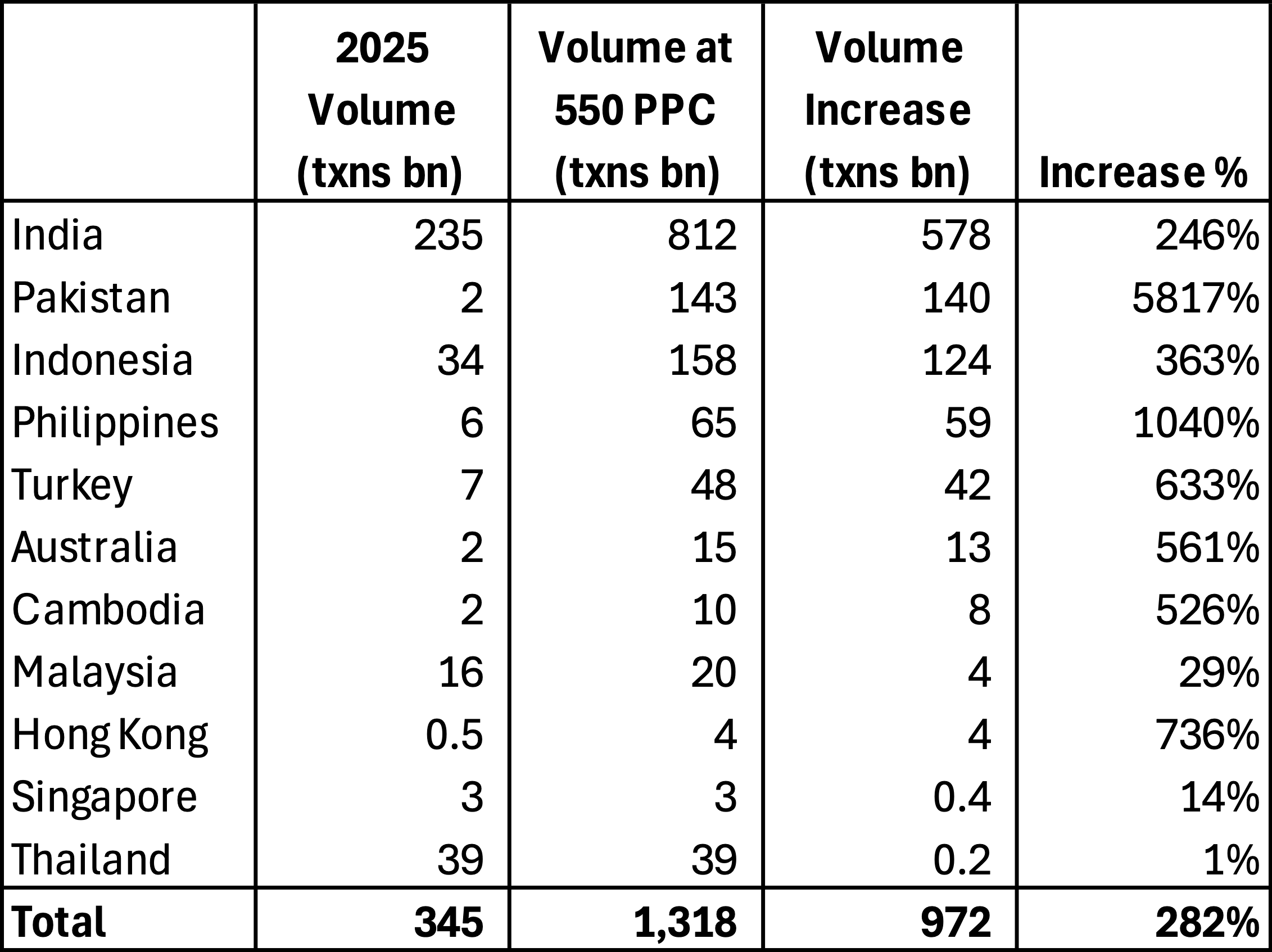
Table 1 – real-time payments growth potential in selected countries in Asia Pacific
Calling all fintechs – last year (footnote 1) I recommended going to Asia Pacific to take a look at the widespread use of innovation and the scale of real-time payments there. This still holds true.
There is hay to be made, particularly in India, Pakistan, Indonesia and the Philippines.
Real-time payment metrics in Asia Pacific 2024: https://jeremylight.substack.com/p/leaving-on-a-jet-plane?r=axqgy
China real-time payments: https://jeremylight.substack.com/p/a-real-time-wallet-to-china?r=axqgy
UPI’s 10th Anniversary (India): https://jeremylight.substack.com/p/unstoppable?r=axqgy
UPI in India: https://jeremylight.substack.com/p/sailing-to-the-moon?r=axqgy
India real-time payments: https://jeremylight.substack.com/p/indian-upi?r=axqgy
Adoption of QR Ph payments (Philippines): https://jeremylight.substack.com/p/just-the-way-qr?r=axqgy
The GCash wallet (Philippines): https://jeremylight.substack.com/p/trapped?r=axqgy
The Grab super app and GrabPay wallet (Philippines): https://jeremylight.substack.com/p/grab-it?r=axqgy
Payments acceptance in Singapore: https://jeremylight.substack.com/p/oom-pay-la-la?r=axqgy
Singapore payments: https://jeremylight.substack.com/p/talkin-singapore?r=axqgy
Only some central banks and payment processors collect and publish on-us volumes. Where they are missing, I have estimated them. It introduces some inaccuracies in the figures but there is consistency between 2024 and 2025, through using the same assumptions for each year. For example, for Pakistan and the Philippines I have added 22% to the respective Raast and Instapay interbank volumes to estimate on-us payment volumes.
Payment System Reports Pakistan: https://www.sbp.org.pk/our-operations/publications
Payment Bulletin Philippines: https://www.bsp.gov.ph/PaymentAndSettlement/PPDD_Payments_Bulletin.pdf?
Payment System Reports China: https://www.pbc.gov.cn/en/3688110/3688259/3689026/3706133/index.html